
.svg)

.svg)


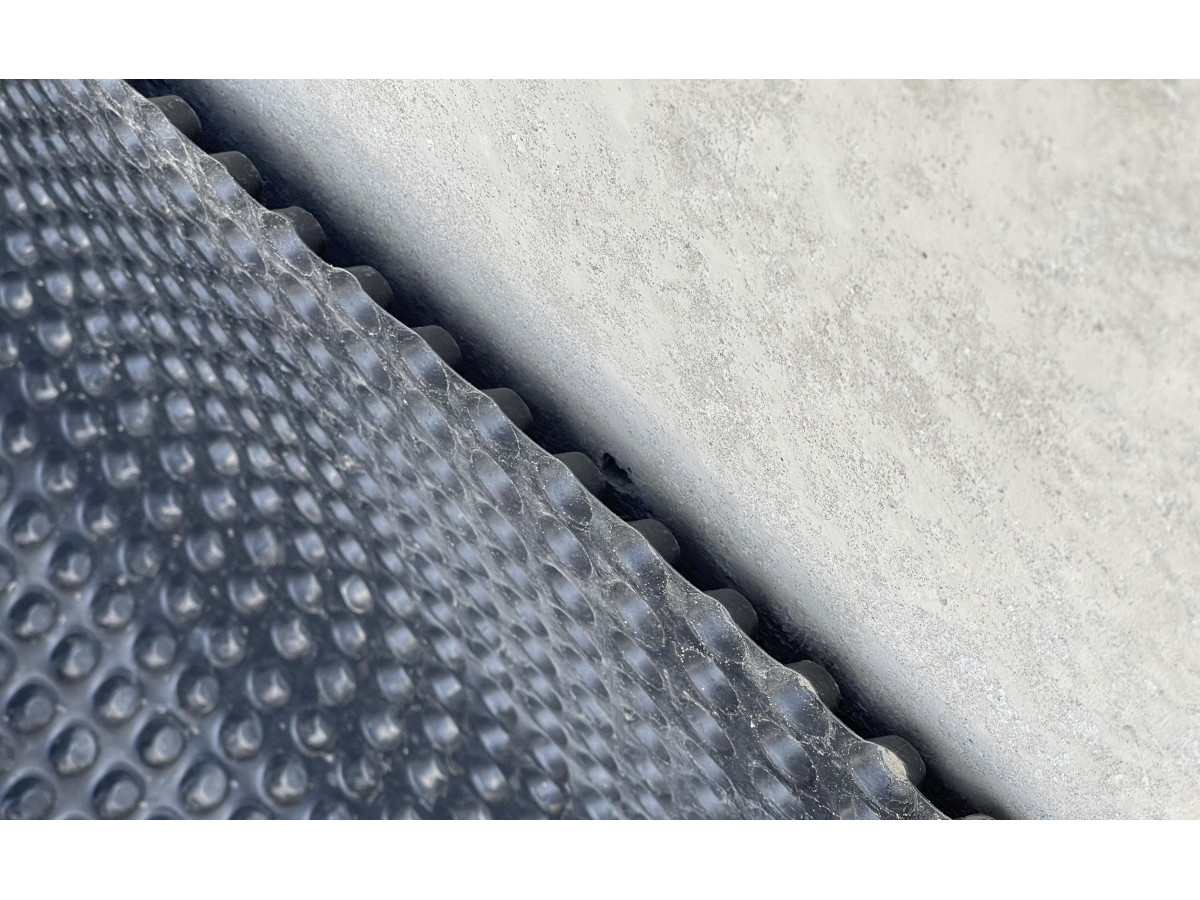
Insufficient attention to waterproofing a building or its individual elements can lead to significant process failures during construction and a reduced service life. An innovative solution in this area is the use of a profiled (studded) membrane.
 A studded membrane is a modern waterproofing material made from high-density polyethylene (HDPE) with hollow cone-shaped protrusions, called studs, on top. These studs distribute pressure from the soil and concrete pavement evenly across the entire membrane, preventing localized deformation. The membrane is used in both new construction and demolition work.
 The main purpose of the profiled membrane is to protect waterproofing from mechanical damage, provide drainage, ventilate damp walls in basements, and serve as an alternative to traditional concrete screeding. It is the ideal material for protecting walls, floors, foundations, and exposed roofs of any size.
Depending on their intended purpose, studded membranes are divided into several types: single-layer, high-strength, waterproof fabric, and two-layer, low-density, heat-bonded geotextiles attached to the membrane, whose primary function is wall drainage.
Installation of the membrane is quite simple and can be performed either vertically or horizontally, or a combination of both.
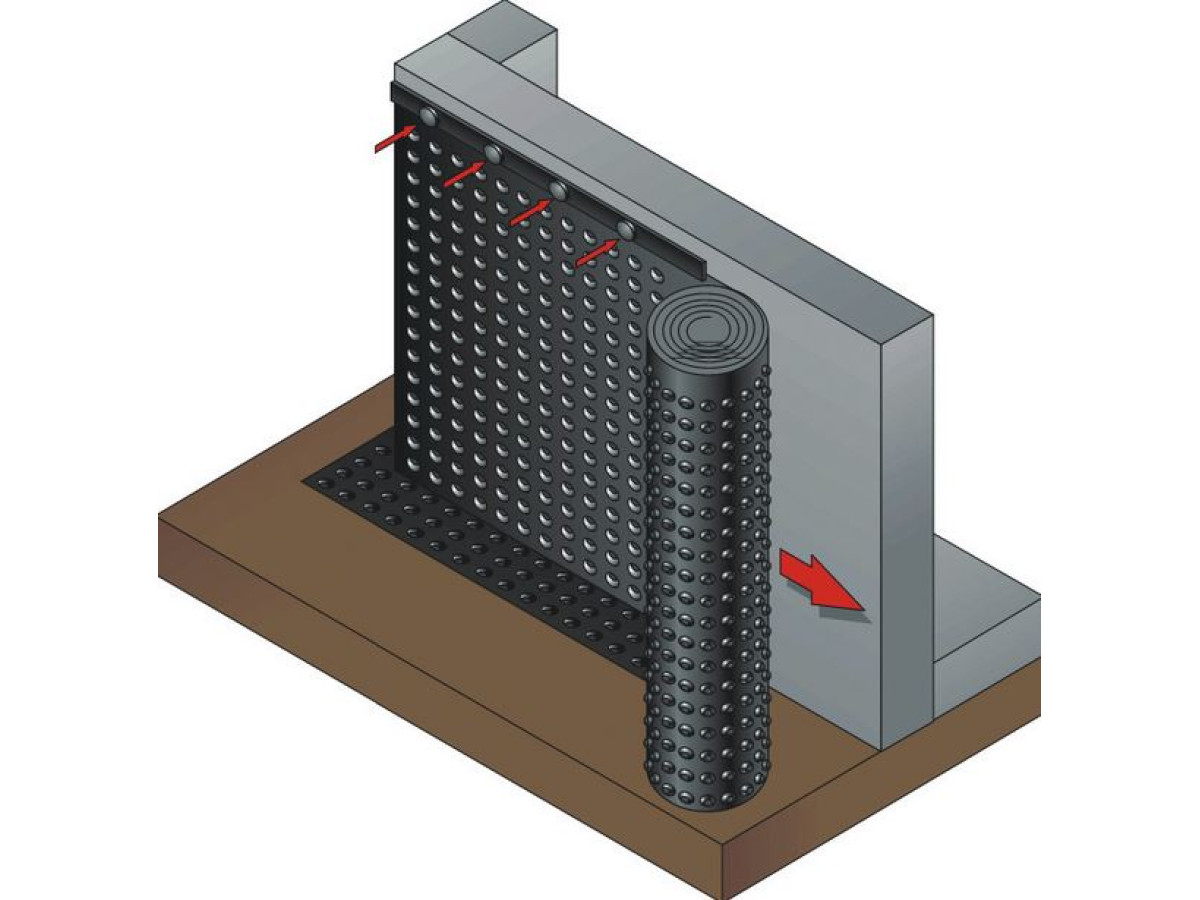
Laying a profiled membrane in a vertical direction (protection of waterproofing of foundations, basements, drainage for water drainage, etc.):
- Rolls of the profiled membrane are laid out on a vertical, level surface of the waterproofing layer with an overlap of 10-20 cm (at least four protrusions). The membrane is positioned so that its sheets protrude 10-30 cm above the soil backfill level.
- A single-layer profiled membrane (without geotextile) is used and secured to the wall with conical spikes.
- For wall drainage, a membrane with geotextile is preferable. In this case, the protrusions are attached to the wall, and the geotextile is attached to the ground.
- The dowel membrane is fixed mechanically using dowels at a frequency of 2-3 fastenings per 1 running metre or a pressure profile.
- It is recommended to seal the overlaps of the membrane sheets with double-sided butyl rubber tape with an adhesive layer or mastic.
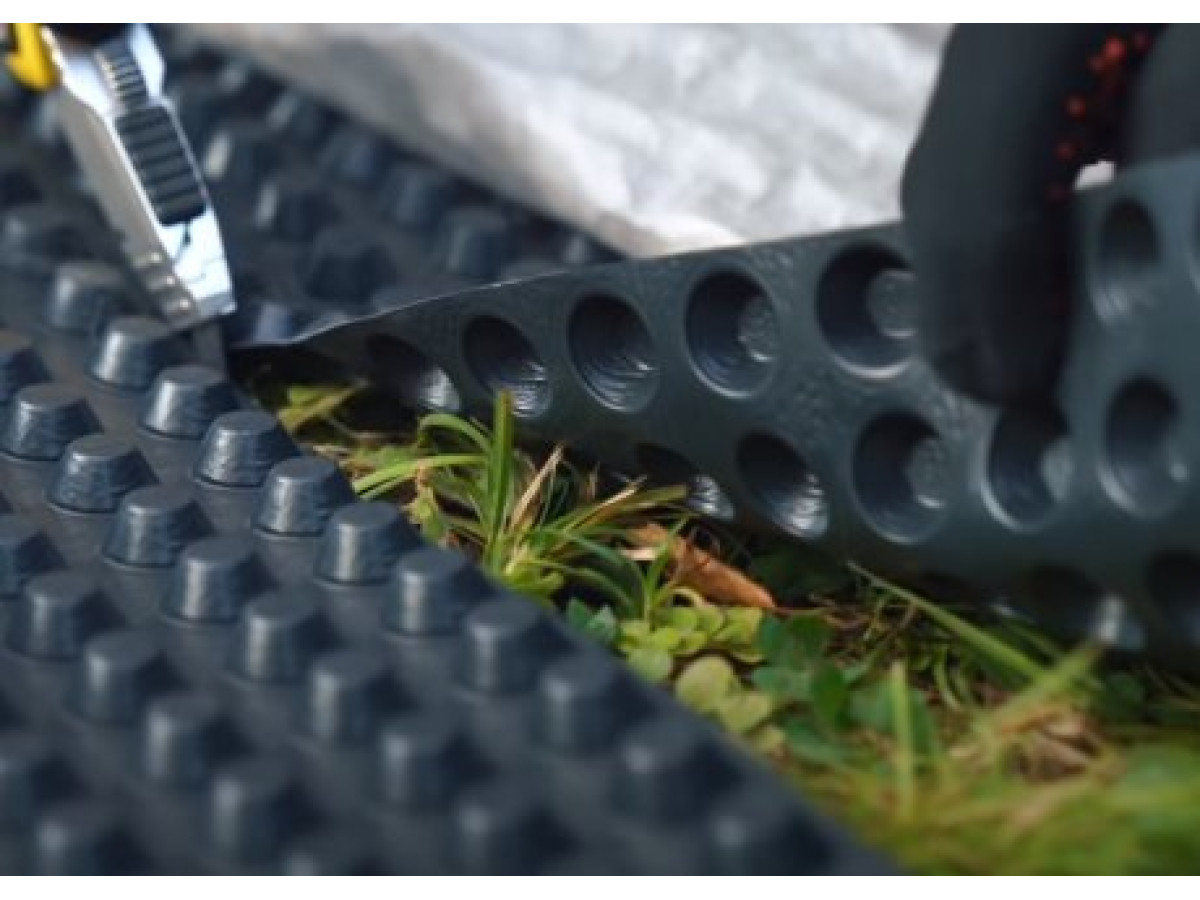
Laying a profiled membrane in a horizontal direction (replacing sub-concrete, installing an accessible roof, constructing concrete roads, etc.):
- The installation of the spiked membrane is carried out on a pre-prepared surface (exploited roofs) or well-compacted soil or sand (concrete roads, paths, blind areas, etc.).
- A membrane is laid along the entire perimeter of the foundation with the geotextile facing up.
- The membrane sheets are joined together with an overlap of at least 10 cm, and the overlap seams are sealed with adhesive butyl rubber tape or mastic.
- Next, subsequent organizational work is carried out depending on the type of structure.
The spiked membrane is an ideal protective material that promotes water and moisture drainage, prevents damage to the applied waterproofing, and significantly extends the service life of the structure and the entire building.
Write a comment