
.svg)

.svg)


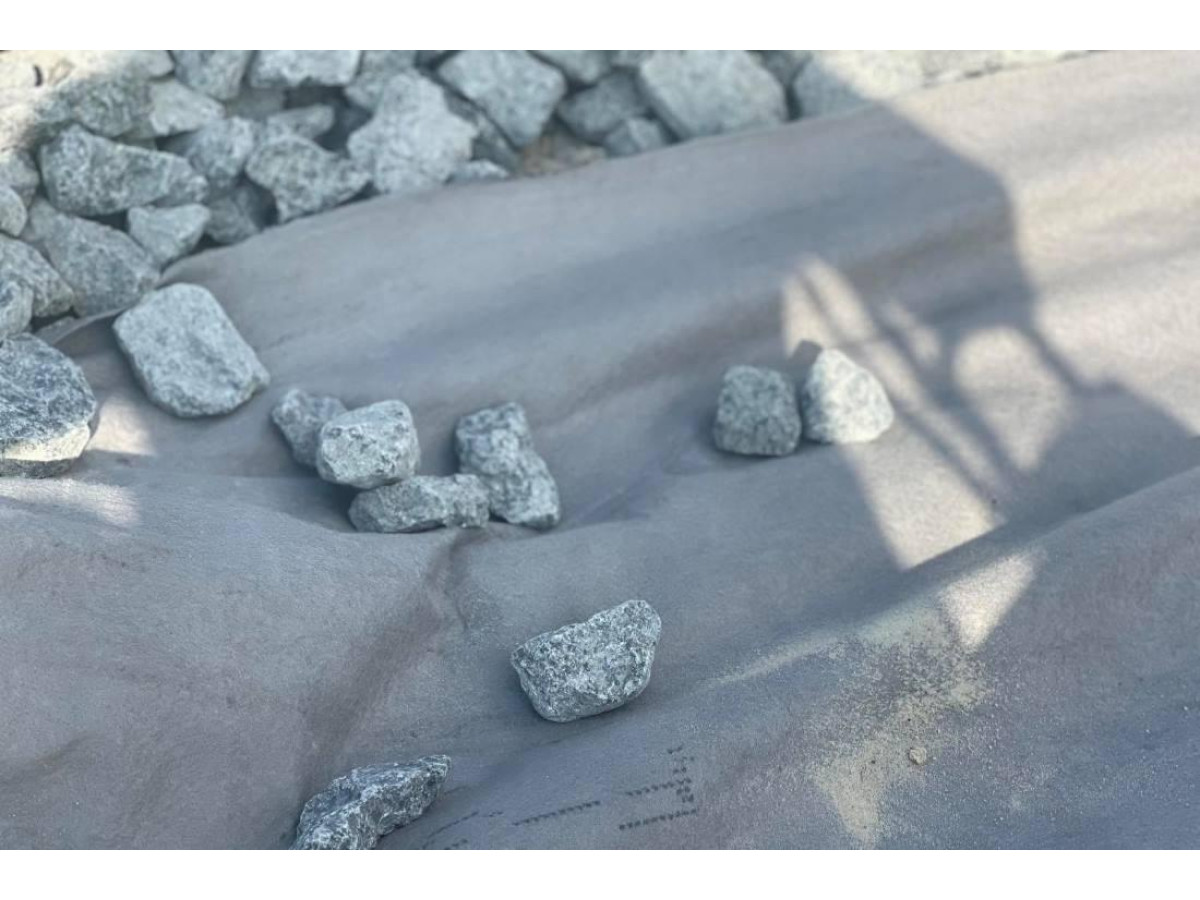
When installing a drainage system at a shallow depth, it is crucial to consider its protection to ensure long-term, trouble-free operation. In other words, pipes tend to silt up, liquids stagnate, and the soil may subside within the drainage trench. Using a material such as geotextile helps eliminate these problems and ensures the stability of the entire drainage system.

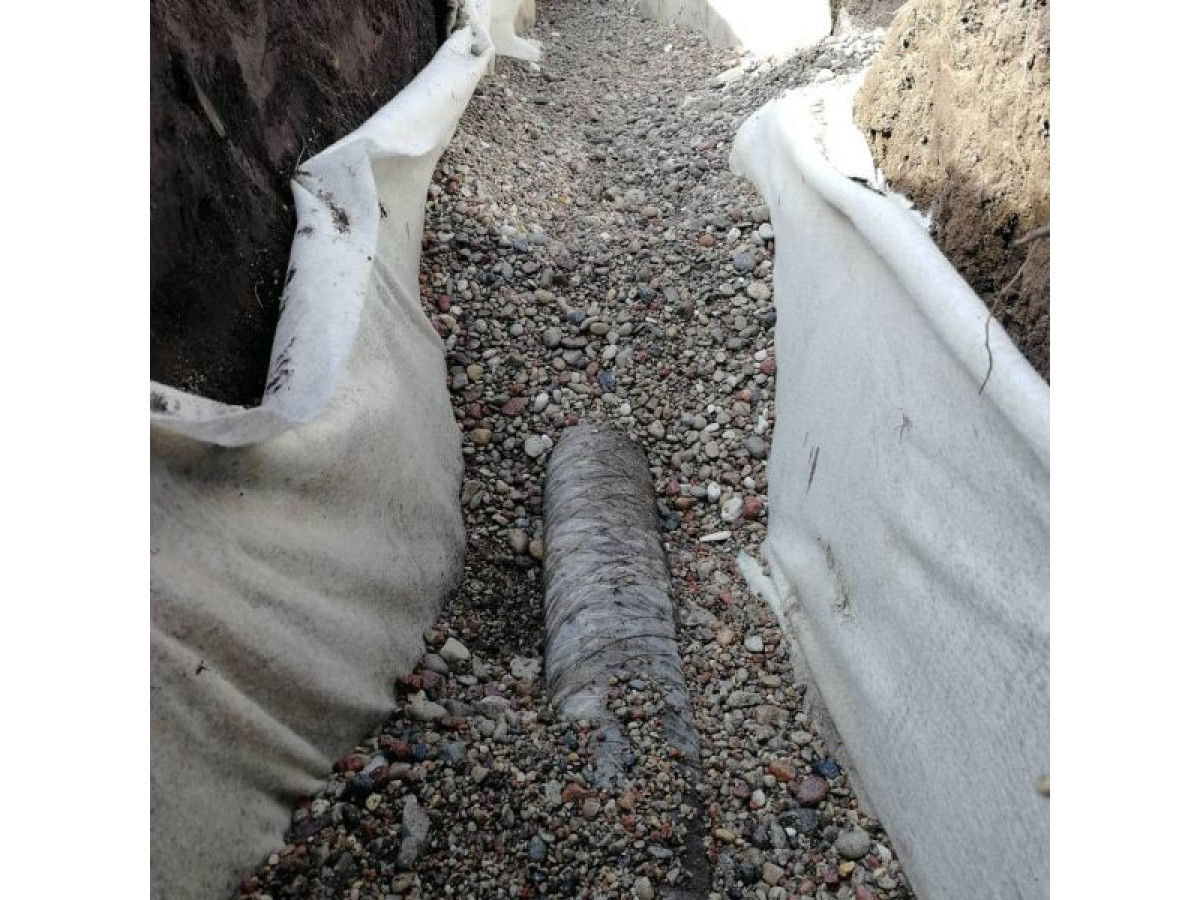
What role does geotextile play in a drainage system, and how do you choose the right geotextile for this type of work? Let's take a closer look in this article.
In a drainage system, geotextile serves as a separation layer between different bulk materials, preventing them from mixing. It also acts as a filter and facilitates water drainage, thereby protecting the drainage structure from silting.
 For the installation of a drainage system, it is necessary to use geotextiles made from synthetic components (100% polyester or polypropylene).
Regarding the type, you can opt for either needle-punched or thermally bonded geotextiles, as both possess excellent permeability characteristics and prevent fine particles of drainage material or soil from entering the system.
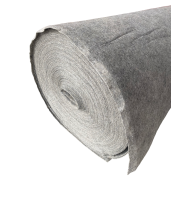
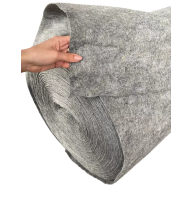
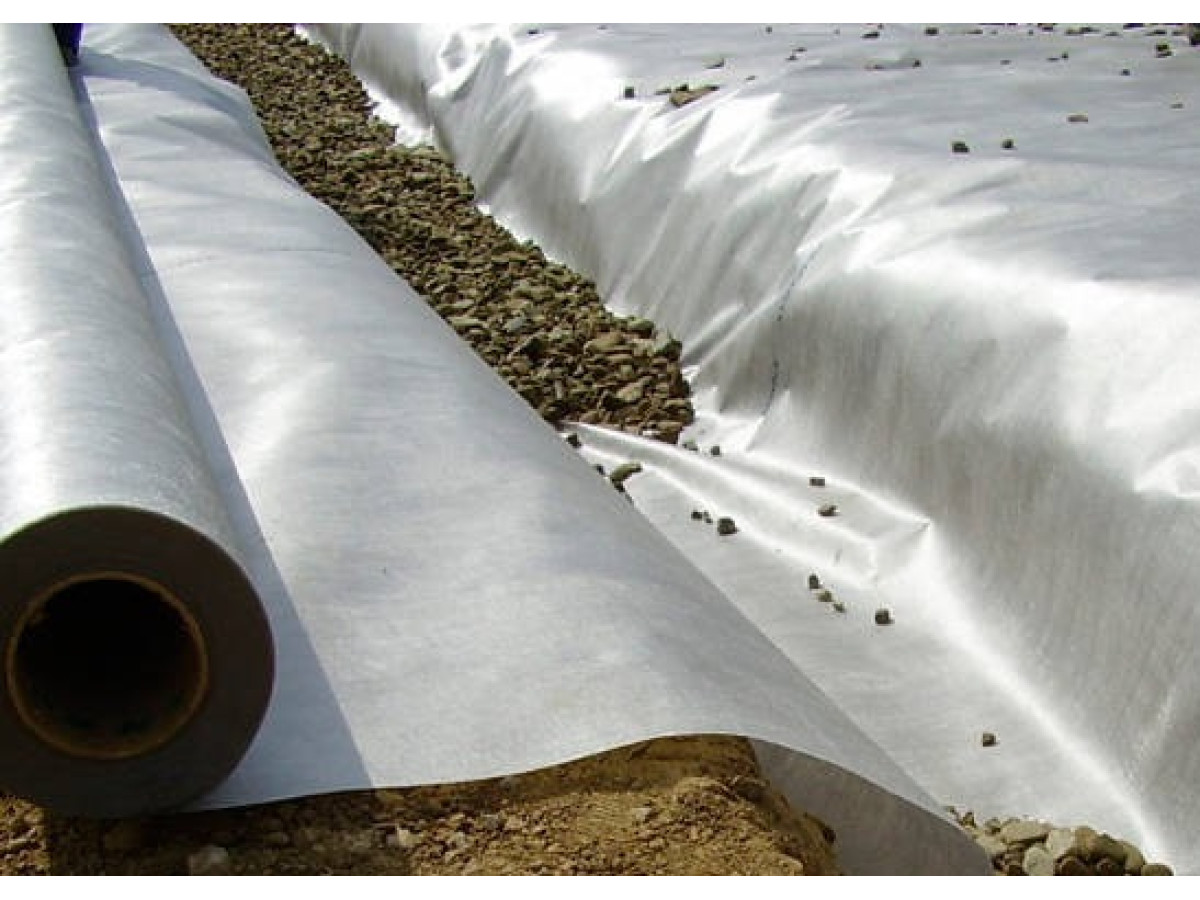 Needle-punched geotextile is more affordable and flexible; however, due to its fibrous structure, soil particles tend to get trapped on the surface of the fabric, causing the system to silt up faster and not function at 100% efficiency.
Thermally bonded or heat-set geotextile is the best choice for drainage systems. This fabric is more durable, withstands heavier loads, and has a smooth surface, while its water permeability is just as good as that of needle-punched material.
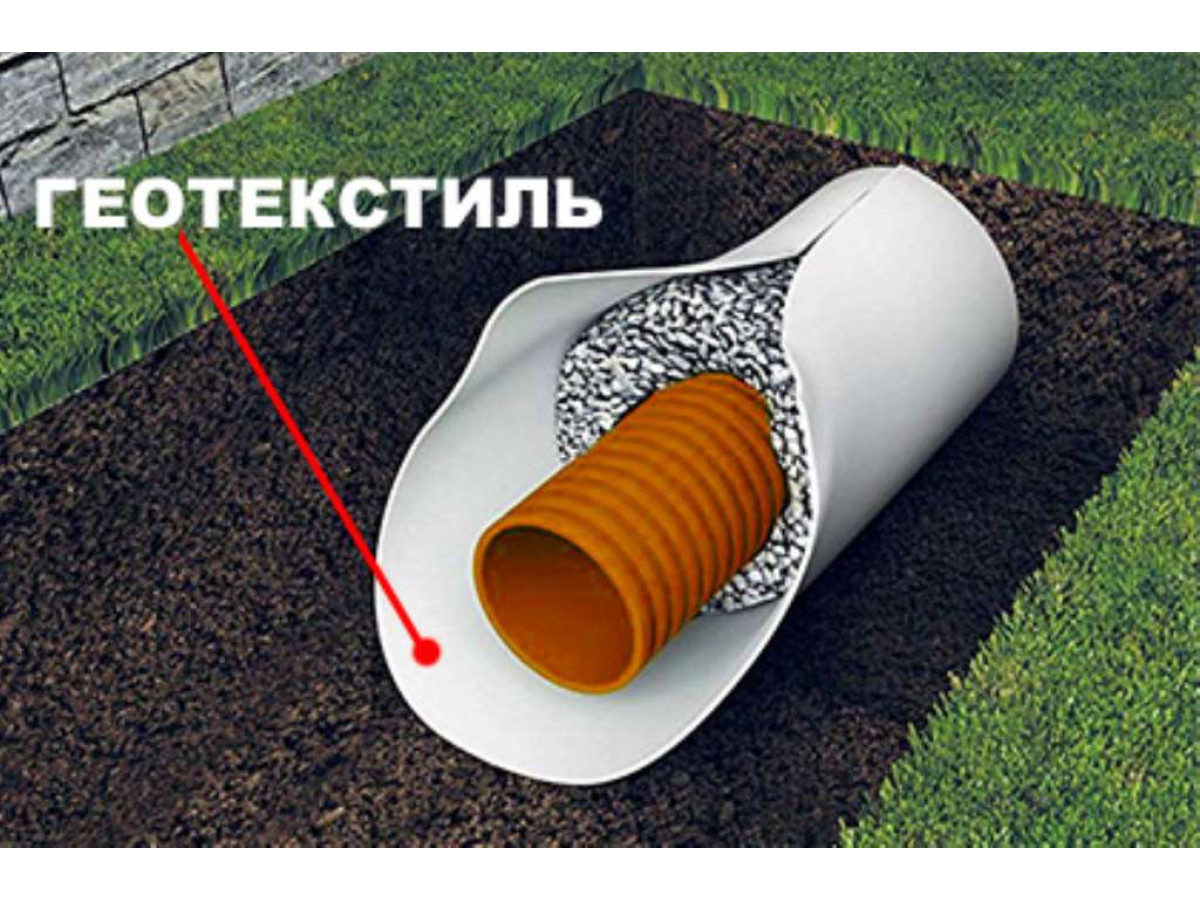
 Setting up a drainage system using geotextiles is quite simple.
The geotextile is laid into a pre-prepared trench, with the fabric edges extending beyond the sides of the trench. The bottom of the trench is filled with a layer of crushed stone or gravel at least 10 cm thick. The drainage pipe is then installed and covered again with crushed stone to about 2/3 of the trench depth. Next, the geotextile edges that were protruding are wrapped over the stone with an overlap to completely cover the joint, and then backfilled with soil.
As a result, you get a reliable and effective drainage system for many years to come!
You can receive additional consultation on choosing drainage geotextiles or order the material by contacting our specialist.
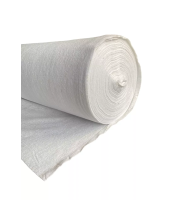
-192x200.png "Needle-punched geotextile, density 150 g/m2 for drainage, filtration and landscaping")
Write a comment